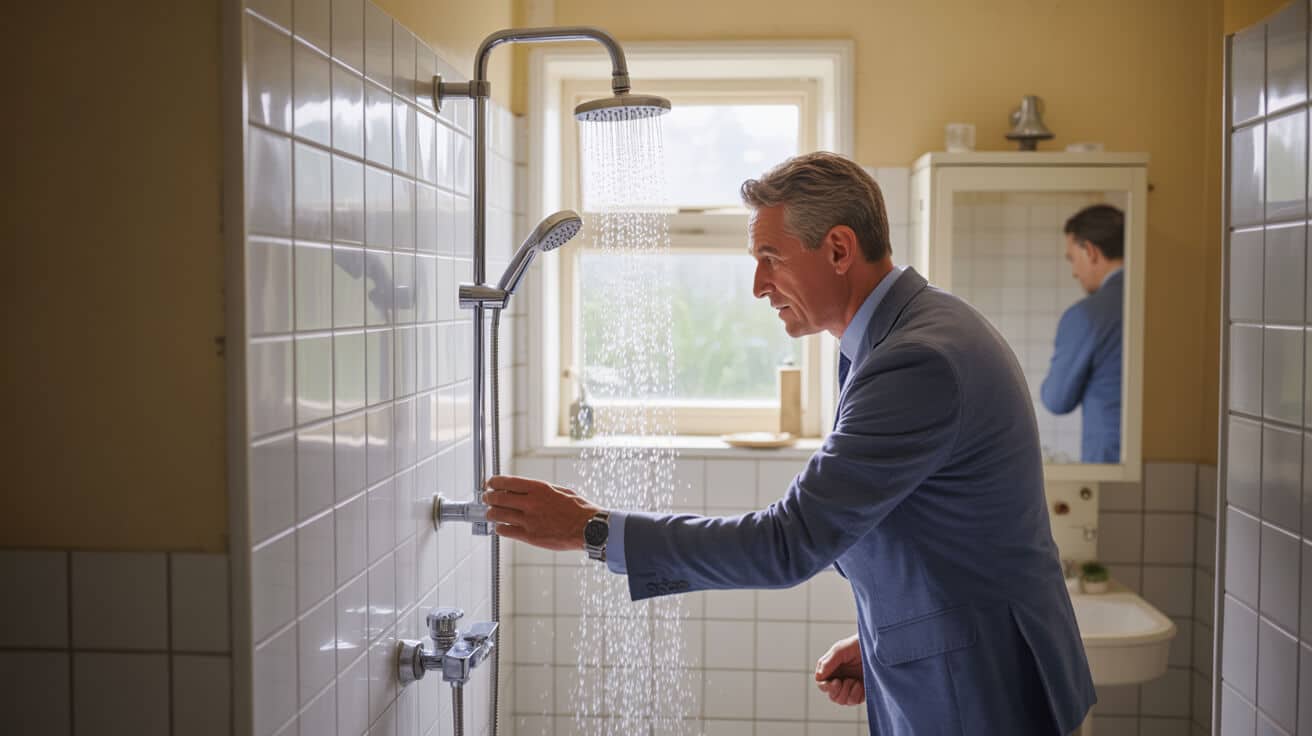
Living in an apartment often requires patience, especially when it comes to maintenance and renovations. For many tenants, the promise of a bathroom upgrade is a cause for celebration. Out with the rusted fixtures, the slow drain, and the cracked tiles; in with the modern, gleaming chrome, and fresh grout. It is a visual transformation that strongly implies a comprehensive environmental health upgrade. We naturally equate “new” with “safe” and “clean.”
However, a deeply informed tenant residing in a classic pre-war Bronx apartment recently shattered this assumption. Weeks after their landlord proudly completed a significant bathroom modernization replacing the vanity, the faucet, and the associated connection pipes the tenant did not send a thank-you note. Instead, they formally and insistently demanded a comprehensive, laboratory-certified water retest.
To the building management, this demand seemed confusing, if not outright ungrateful. Why would you need to test the water flowing from a brand-new faucet? But the tenant understood a terrifying environmental reality that is frequently overlooked by property managers and contractors: a bathroom upgrade doesn’t automatically solve a lead problem, and sometimes, the very process of renovation can activate hidden, dormant hazards within the apartment’s infrastructure.
The Dangerous Illusion of the Fresh Faucet
The core mistake the landlord made was assuming that visual aesthetics guarantee environmental purity. This is the ultimate “eye test” fallacy. If you install a $200 designer faucet, the water flowing through it must be perfect. But environmental chemistry doesn’t respect price tags or designer finishes.
The problem is rarely the fixture itself (though older brass hardware has severe metallurgical flaws). The critical contamination points are almost universally hidden deep within the infrastructure buried beneath the sidewalk or running vertically through the core of the historic building. The contamination does not happen at the new kitchen sink; it occurs when the pristine, highly protected municipal water supply leaves the city main and enters the specialized localized environmental safety profile of your specific building. In an older Bronx building, assuming your “new” bathroom is safe without definitive laboratory data is a massive, unacceptable biological liability. Pasive compliance with outdated state mandates is not enough; you carry the ultimate responsibility for the invisible lead contamination profile of your own environment.
The Physical Reason: Construction Disturbance
The first, and most common, reason this Bronx tenant was right to demand a retest is physical disturbance. Over decades of use, older lead service lines (the pipes connecting the street main to the basement) or internal copper pipes joined with lead-based solder develop a protective interior lining called scale. This layer of mineral buildup effectively acts as a barrier, minimizing the rate at which lead particles can dissolve into the supply.
When a contractor comes in to upgrade a bathroom, the work is dynamic. They cut into old pipes, they vibrate existing lines with heavy-duty tools, and they may apply heat (torching) to nearby connections. This dynamic construction work creates massive, unpredictable mechanical and physical stress throughout the subterranean infrastructure.
External Authority Link: According to the Environmental Protection Agency (EPA), any significant disruption to aging pipes can cause that protective scale lining to crack, flake, and physically break loose. These invisible, highly toxic heavy metal particles are then sent directly into the home’s plumbing system. A visual upgrade does not mean structural stability; it frequently means construction-induced environmental volatility.
The Chemical Reason: Galvanic Corrosion
The second, metallurgical reason this retest was essential involves the chemical interaction between dissimilar metals. This Bronx renovation likely utilized modern copper piping to replace the old vanity lines. However, those new copper lines must connect to something. In many pre-war Bronx apartments, the main risers the massive, buried pipes that carry water from the basement up through the building are original to the structure.
When you connect a new copper pipe directly to an old lead service line or an internal lead pipe, you create what plumbers and environmental chemists call a galvanic cell. You have essentially built a tiny, powerful battery deep inside your walls. As water which is an efficient electrolyte flows through this connection, a constant chemical reaction occurs.
This reaction attacks the more active metal (the lead), causing it to dissolve, degrade, and corrode at an exponentially accelerated rate. In an attempt to modernize a few localized inches of plumbing, the landlord may have inadvertently activated a powerful heavy metal leaching process throughout the subterranean infrastructure, guaranteeing that the water flowing through the “new” bathroom faucet is actually more neurotoxic than the supply delivering water to the old one. If your specific localized environmental profile presents complex metallurgical challenges, we encourage you to browse our common questions for detailed technical guidance.
The Failure of Building-Wide Generalizations
The landlord’s probable defense was data-driven: “We test the building’s water annually, and it passes!” For a high-rise co-op or massive rental property, this statement is likely technically true on paper. But for an individual tenant, building-wide generalizations are environmentally worthless.
When property managers execute state-mandated testing, they typically sample the water from the worst-case location, like the basement boiler room, or from a high-flow utility sink. If the sample from the clean municipal main in the basement boiler room passes, the building issues a memo stating the entire building is “safe.” This is environmental theater. It tells you nothing about the water chemistry inside an apartment on the seventh floor, especially one that has just undergone localized construction disturbance.
The Bronx tenant knew that real risk is not found in the flushed water of the basement main; it is found in the “first draw” the water that has been stagnating in your specific fixtures overnight. A standard city-provided testing kit that optimizes for building-wide averages completely misses this individualized risk profile, which is why taking definitive control of your own specialized localized environmental profile is essential. Proactive environmental stewardship requires definitive, state-accredited laboratory data.
The Public Health Imperative: Why Lead Water is Toxic
The driving force behind this tenant’s demand was, ultimately, health. Lead is a potent neurotoxin with severe, cumulative, and irreversible health impacts. External Authority Link: According to the Centers for Disease Control and Prevention (CDC), there is absolutely no safe level of lead in human blood.
For families raising children in older housing, the stakes are exponentially higher. Infants and toddlers are dynamic developmental environments; a brain experiencing rapid, massive developmental explosion is profoundly susceptible to heavy metals. Chronic exposure, even in minute, invisible doses that visual walkthroughs cannot detect, is definitively linked to cognitive developmental delays, lowered IQ, shortened attention spans, and irreversible behavioral disorders.
Adults are not immune; long-term lead ingestion contributes to increased blood pressure, cardiovascular disease, and reduced kidney function. This Bronx tenant understood that an environmentally compromised environment is fundamentally unsalable and uninhabitable for any vulnerable population. A beautiful bathroom isn’t worth neurotoxic developmental delays.
Securing Permanent Protection, Not Just a Reset
This Bronx scenario is a vital warning for anyone who lives on the dynamic localized environmental profile of Northern NYC. We cannot guess about environmental chemistry. If you have recently upgraded your kitchen, bathroom, or even replaced a water heater, you must execute localized retesting.
Relying on state mandates or free kits is a risky gamble. Proactive environmental safety requires laboratory-certified water analysis that specifically includes strict “first draw” sampling. If your localized supply fails, immediate, stopgap protection requires mechanical filtration at the point of use.
External Authority Link: According to NSF International, standard pitcher filters or basic refrigerator filters are entirely ineffective at removing dissolved heavy metals. You must utilize dedicated reverse osmosis systems or high-capacity carbon block filters explicitly certified (NSF 53) to remove heavy metals. While filtration provides temporary facility-wide environmental safety, the only permanent, structural fix is full service line and internal plumbing replacement.
Taking control of your home’s environmental safety profile empowers you to make informed structural and health decisions. Would you like me to connect you with our team so we can help you coordinate a comprehensive, certified water analysis to verify your localized environment and help you navigate the complex local regulations? Please contact us today to ensure your water is safe, legal, and permanently protected.