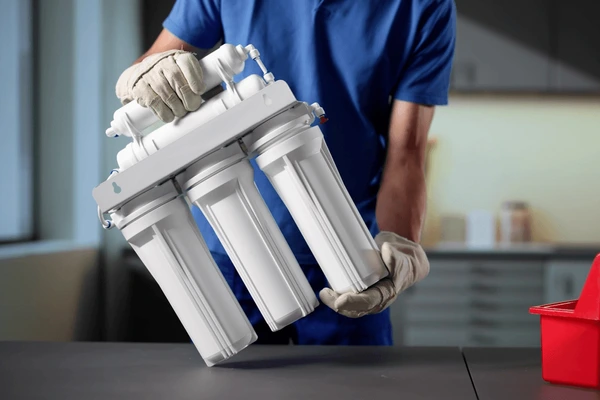
For many homeowners in 2026, a water filtration pitcher or a refrigerator filter is a standard kitchen appliance. We have become conditioned to equate “better taste” with “purity.” When we pour a glass of water that lacks the sharp tang of chlorine or the metallic hint of old pipes, we instinctively assume it is safe for our families. However, there is a technical reality that many consumers overlook: the mechanisms that improve the flavor of your water are often entirely different from the ones required to remove lead in water.
Understanding the difference between aesthetic filtration and health-grade contaminant removal is essential. In an era where aging infrastructure remains a persistent challenge, relying on a basic carbon filter to handle heavy metals can create a dangerous “masking effect.” You may be enjoying the most refreshing-tasting water you’ve ever had, while still consuming sub-clinical levels of a potent neurotoxin.
The Charcoal Myth: How Basic Filters Work
The most common type of home water filter uses Activated Carbon. Carbon is exceptionally good at “adsorption,” a process where impurities are trapped in the tiny pores of the carbon granules. This process is highly effective at removing organic compounds that cause bad smells and tastes, such as chlorine, which municipal systems use for disinfection.
However, lead is a heavy metal, and it often exists in water as a dissolved ion or as microscopic particulate matter. Unless an activated carbon filter has been specifically engineered and chemically treated to bind with lead ions, the lead molecules can simply slip through the carbon “maze” and end up in your glass. If your filter is not specifically labeled with a certification for lead removal, it is likely doing nothing more than making your contaminated water taste better. We discuss these technical distinctions frequently in our faq to help families choose the right equipment.
The Masking Effect: When Better Taste is Dangerous
One of the few “natural” warning signs of old plumbing is a metallic taste or a slight discoloration. While lead itself is tasteless and odorless, it is often accompanied by iron or copper from the same aging infrastructure. A basic filter might remove the iron (which causes the taste) but leave the lead behind.
By removing the “warning signs,” a basic filter can actually increase your exposure. You might stop flushing your taps in the morning or stop using bottled water for infant formula because the filtered tap water “tastes fine.” This is the core of the filtration trap: the absence of a bad taste is not evidence of the absence of lead. On our blog, we highlight case studies where homeowners were shocked to find high lead levels in water that had already passed through a popular brand-name pitcher.
Certification Matters: NSF/ANSI Standard 53 vs. 42
When you look at the packaging of a water filter, you will see various certifications. Understanding these numbers is the difference between a cosmetic fix and a health-saving one.
NSF/ANSI 42: This covers “Aesthetic Effects.” It means the filter is certified to reduce chlorine, taste, and odor. It does NOT guarantee the removal of lead. NSF/ANSI 53: This covers “Health Effects.” A filter with this certification has been tested to reduce specific contaminants like lead, mercury, and asbestos to levels below the EPA’s regulations.
If your refrigerator filter or pitcher doesn’t explicitly state it meets Standard 53 for lead, you should assume your family is unprotected. Many “standard” filters included with new appliances are only rated for Standard 42. Upgrading to a lead-rated version is a vital step for anyone living in an area with legacy plumbing.
Particulate Lead: The Filter Clogger
Even if you have a lead-certified filter, the nature of lead contamination can work against you. Lead often enters the water as “particulate” lead tiny flakes of metal that break off from a lead service line or lead-soldered joints. These particles can be extremely high in lead content.
If there is nearby construction or a change in water pressure in your local area, a surge of particulate lead can hit your filter. While the filter may catch these particles, they can eventually clog the filter media or, in some cases, “slough off” and enter the water stream if the filter is not changed exactly on schedule. A filter that is past its expiration date can actually become a source of contamination rather than a solution.
The Hot Water Filter Failure
Another common mistake is using filtered water for tasks that involve heat. Most countertop and under-sink filters are designed to work only with cold water. As we’ve discussed in our guides on lead in water, heat increases lead leaching.
If you use a filter pitcher but then fill a kettle with that water to boil it, you are starting with “filtered” water, but the heat of the kettle itself can draw lead out of the kettle’s own internal components or any scale buildup if the kettle is older. Furthermore, many people use the “hot” side of a filtered faucet for cooking, assuming the filter is working. Most filters lose their effectiveness at high temperatures, allowing lead to pass right through the media.
Testing: The Only Way to Verify Filter Performance
The only way to know if your filter is actually solving your lead problem is to test the water after it has been filtered. A “before and after” test is the gold standard for home safety. It tells you two things: exactly how much lead is coming into your home from the infrastructure, and exactly how well your filter is performing.
If a post-filter test still shows lead, it means your filter is either the wrong type, is expired, or the contamination is so high that it is “overpowering” the filter media. This data is the most powerful tool you have. It moves you from “hoping” your water is safe to “knowing” it is.
Comprehensive Solutions Beyond the Pitcher
If you discover that a basic filter isn’t enough, consider these more robust options: Reverse Osmosis (RO) Systems: These systems use a semi-permeable membrane to remove up to 99% of all contaminants, including lead. They are much more effective than carbon alone. Point-of-Entry (POE) Systems: These filter all the water entering the house, protecting the hot water tank and every faucet simultaneously. Service Line Replacement: The most permanent solution is to remove the source. Replacing a lead service line eliminates the need to “fix” the water at the tap.
Conclusion: Don’t Let Taste Deceive You
In 2026, we have the technology to make even the most contaminated water taste like a mountain spring. But taste is a cosmetic feature, not a safety metric. If you are relying on a filter to protect your children from lead in water, you must ensure that the technology matches the threat.
Check your filter’s certification today. If it doesn’t say “NSF 53,” it’s time for an upgrade. Peace of mind shouldn’t just be about how the water feels on your tongue; it should be about the data on the lab report.
If you are unsure if your current filtration system is rated for lead removal, or if you have performed a post-filter test that still shows concerning results, our team is here to help. We specialize in identifying the gaps between “tasting good” and “being safe.” Please visit our contact page to connect with a water quality specialist today. Let us help you verify your filters and secure your home’s most vital resource.