For the modern homeowner, the term “lead-free” carries a significant amount of weight. It is a label that suggests absolute safety, a final resolution to the long-standing concerns regarding lead in water. When you walk into a home improvement store in 2026 and purchase a high-end faucet, you likely assume that the internal components are as pure as the exterior finish. However, a growing body of professional water quality data suggests that the reality is far more nuanced. In the controlled environment of a testing laboratory, a fixture may meet every federal standard, but once installed in the complex, variable infrastructure of a residential home, that same fixture can still contribute to lead exposure.
Understanding why a “certified” product might fail in your kitchen or bathroom requires looking past the marketing and into the chemistry of how water interacts with metal. In real-world conditions where water chemistry, temperature, and usage patterns vary wildly the “lead-free” label is often a starting point, not a guarantee.
The Legal Definition of “Lead-Free”
The first point of confusion for many residents lies in the regulations themselves. The term “lead-free” does not actually mean zero lead. Following the 2011 Reduction of Lead in Drinking Water Act, which took full effect in 2014, the federal standard for “lead-free” was redefined. It currently allows for a weighted average lead content of up to 0.25% across the wetted surfaces of pipes, pipe fittings, and plumbing fixtures.
While 0.25% is a massive reduction from the previous 8% allowance, it is still a measurable amount of lead. In a laboratory, these fixtures are tested using standardized, non-corrosive water. But in your home, the water might be slightly acidic, or it might contain high levels of dissolved oxygen. Under these “aggressive” water conditions, even that tiny fraction of a percent can be pulled out of the brass alloy and into your drinking glass. This is a topic we address frequently in our faq, as it explains why a brand-new home can still return a positive lead result.
The Impact of Stagnation: The “Weekend Effect”
One of the most significant real-world factors that lab tests cannot fully replicate is stagnation. Laboratory certifications often involve flowing water, but in a typical household, water sits still for 6 to 10 hours overnight, or even days if the family is away for the weekend.
During these periods of stillness, the water is in constant contact with the internal brass components of the faucet. Even a “lead-free” fixture can experience a localized buildup of lead during these hours. When you turn on the tap on a Monday morning, that first “pulse” of water may contain a concentration of lead that exceeds the EPA action level, simply because the water had the time to “steep” like tea against the metal. This is why we emphasize the “first-draw” sampling method on our blog; it captures the reality of how we actually use our plumbing.
Temperature and the Hot Water Catalyst
Temperature is perhaps the most overlooked variable in residential water safety. Most “lead-free” certifications are conducted using room-temperature or cold water. However, as we have documented in numerous local case studies, heat acts as a powerful catalyst for lead leaching.
If you use your “lead-free” kitchen faucet to draw hot water for cooking or making tea, you are subjecting the internal brass valves to thermal stress that can accelerate the release of lead. The 0.25% lead content that remains stable in a cold-water test can become highly mobile in 120°F water. This discrepancy highlights why testing both the hot and cold lines is essential for a complete safety profile, especially in homes with high-performance water heaters.
Galvanic Corrosion: The “New Meets Old” Problem
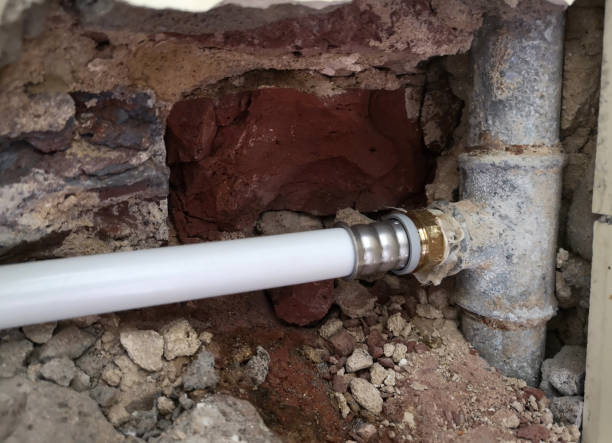
In many renovations, a new “lead-free” fixture is installed onto older infrastructure. This creates a “mixed-metal” environment that can trigger galvanic corrosion. When a modern stainless steel or copper-based fixture is connected to an older galvanized steel pipe or a vintage brass shut-off valve, a tiny electrical current is created.
This current can “pull” lead from the older components and deposit it into the water stream just as it passes through your new faucet. Paradoxically, the high quality of your new fixture can sometimes contribute to the degradation of the old parts it is connected to. In this scenario, the “lead-free” faucet isn’t the source of the lead, but its installation is what triggered the release. Understanding this interaction is a key part of modern home maintenance.
Surface Area and Complex Internal Designs
Modern faucets are often complex pieces of engineering, featuring pull-down sprayers, internal plastic tubing, and intricate diverter valves. While the main body of the faucet may be high-quality stainless steel, the smaller internal connectors, “O-rings,” and “nipples” may still be made of leaded brass alloys.
Because these internal parts have a high surface-area-to-water-volume ratio, they can contribute significantly to lead levels in the “first-draw” sample. Even if the total weight of lead in the faucet is under 0.25%, the specific placement of that lead in a high-contact internal valve can result in a failed water test. This is why “fixture-specific” testing is the only way to verify if a modern design is performing as advertised in your specific home.
The Role of Particulate Lead
Most “lead-free” certifications focus on dissolved lead lead that has melted into the water. However, real-world plumbing often contains “particulate” lead tiny physical flakes of metal or mineral scale that have broken off from pipes further up the line.
These flakes can become trapped in the aerator or the internal screens of a new faucet. Once trapped, they sit in the water flow and slowly dissolve over time. A “lead-free” faucet can effectively act as a “lead trap,” accumulating contaminants from the rest of the building and releasing them into your glass. We encourage homeowners to regularly clean their aerators to prevent this localized buildup, a tip we highlight in our faq section.
How to Ensure Your “Lead-Free” Home is Actually Safe
Given these real-world variables, how can a homeowner be sure of their water quality? The answer is regular, certified laboratory testing.
Perform a “Sequential” Test: Collect a sample immediately upon turning on the tap (the fixture water), and then another after the water has run for two minutes (the pipe water). This will tell you if the lead is coming from your faucet or your home’s main lines. Check the Certification: Look for fixtures that are certified to NSF/ANSI 61 and NSF/ANSI 372 standards. These are the most rigorous current standards for lead leaching and content. Use Cold Water for Consumption: Regardless of the age of your fixtures, always use the cold tap for drinking and cooking to minimize thermal leaching. Flush the Tap: If the water has sat for more than 6 hours, run it for 30 seconds before filling a glass.
Conclusion: Moving Beyond the Label
The “lead-free” label is a significant achievement in public health, but it is not an invisibility cloak for heavy metals. In the complex chemistry of a residential home, variables like stagnation, temperature, and galvanic corrosion can challenge even the best-engineered fixtures. By recognizing that safety is a product of both the hardware you buy and the way you maintain your home, you can move toward a truly lead-free lifestyle.
Data is the ultimate bridge between marketing and reality. By testing your water in “real-world” conditions, you can ensure that your home’s infrastructure is providing exactly what it should: safe, clean, and healthy water for your family.
If you have recently installed new fixtures and want to verify their performance, or if you are concerned about lead levels in a newer home, our team is here to help. We specialize in identifying the subtle ways that modern plumbing can still harbor risks. Please visit our contact page to connect with a water quality specialist today. Let us help you go beyond the label and gain the peace of mind that comes from certified facts.