Walking through the tree-lined streets of Brooklyn neighborhoods like Park Slope, Cobble Hill, or Bedford-Stuyvesant, it is impossible to ignore the constant hum of construction. The real estate market here is fueled by the passionate restoration of historic brownstones and townhouses. Buyers frequently invest millions of dollars not just to acquire these architectural treasures, but to completely gut and modernize their interiors. It is a massive undertaking, transforming centuries-old floor plans into sleek, modern living spaces outfitted with the latest technologies, luxury appliances, and brand-new plumbing systems.
Because of this intense modernization, a dangerous assumption has taken root among buyers, investors, and even some contractors: if a home has been newly renovated with fresh plumbing, the water flowing from its designer faucets must be perfectly safe. Unfortunately, this is a profound misconception. Despite extensive and expensive interior renovations, many beautifully updated Brooklyn brownstones are still failing laboratory tests for tap water lead. This unsettling reality proves that fresh drywall and new bathroom tiles are not enough to eradicate a systemic environmental hazard, and it highlights a critical infrastructure blind spot that threatens the health of countless new homeowners.
The Allure and Limits of the Gut Reno
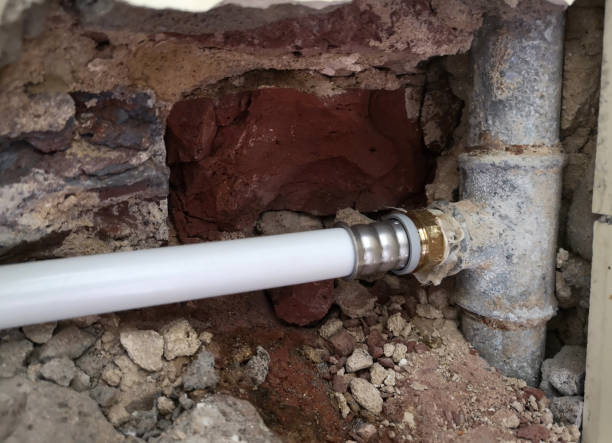
When a buyer purchases a historic Brooklyn property with the intent to renovate, the plumbing is almost always on the hit list. Contractors will strip out the walls and rip up the floorboards, systematically removing decades of aging, corroded galvanized steel or cast-iron pipes. In their place, they install gleaming new runs of modern copper piping or flexible, high-tech PEX tubing.
Visually, this interior transformation is absolute. When the homeowner finally moves in and turns on the kitchen tap, they know the water is traveling through brand-new, lead-free pipes within the walls of their home. This creates a powerful, but ultimately false, sense of environmental security.
The critical flaw in this logic is one of scope. A standard interior gut renovation only addresses the plumbing that exists within the physical footprint of the building. It completely ignores the unseen, subterranean journey the water must take before it ever reaches the foundation of the house. In older urban environments, the most severe source of contamination is rarely found behind the kitchen cabinets; it is buried deep beneath the front sidewalk.
The Underground Blind Spot: The Service Line
To understand why renovations fail to solve the lead problem, you must understand how water enters a Brooklyn home. While the massive municipal water mains running beneath the city avenues are generally safe and lead-free, the water must travel from that public main to your private basement. The pipe that bridges this gap is called the service line.
For properties built before 1961 in New York City, lead was the legal and preferred standard for these service lines. It was durable, flexible, and perfectly suited to navigating the dense, shifting soil of the urban underground. Because the vast majority of Brooklyn’s historic housing stock predates this ban by decades, countless properties still rely on their original, century-old lead service lines.
Crucially, in New York City, the property owner not the city is legally and financially responsible for this service line from the public main in the street all the way into the home.
When a contractor performs a luxury renovation, they rarely touch this subterranean pipe. Replacing a service line is a massive, highly disruptive capital expenditure. It requires securing specific municipal permits, hiring specialized excavation crews, ripping up the front garden, breaking through the concrete sidewalk, and sometimes even excavating the public street to reach the city main. Because it is so expensive and visually unglamorous, it is frequently excluded from the renovation budget. As a result, the brand-new internal plumbing is simply connected directly to the ancient, toxic lead service line outside. You can have a million-dollar interior, but if your water is being delivered through a lead straw, your home’s infrastructure remains fundamentally compromised.
The Chemical Danger of Partial Upgrades
Leaving an old lead service line attached to brand-new interior plumbing doesn’t just maintain the status quo it can actually make the contamination worse. This occurs due to a complex electrochemical process known as galvanic corrosion.
When two dissimilar metals, such as an old lead service line and a newly installed interior copper pipe, are connected and submerged in an electrolyte (like tap water), they essentially create a crude, low-voltage battery. A chemical reaction begins to take place at the point where the two metals meet. In this specific combination, the copper acts as a cathode, and the lead acts as an anode.
The galvanic reaction aggressively attacks the lead, causing it to break down and corrode at a highly accelerated rate. Microscopic particles of lead are rapidly stripped from the inside of the service line and released directly into the water stream entering the home.
External Authority Link: The Environmental Protection Agency (EPA) heavily monitors the science of corrosion control precisely because of this phenomenon. When municipal water chemistry fluctuates, or when partial pipe replacements trigger galvanic corrosion, lead levels can spike dramatically without any visual warning.
A homeowner who has just completed a massive renovation might inadvertently subject their family to significantly higher concentrations of toxic lead than the previous occupants experienced, simply because the clash of old and new metals destabilized the buried service line.
Preserving Character vs. Preserving Health
The service line isn’t the only hidden hazard in a renovation. The Brooklyn real estate market places a massive premium on historical authenticity. Many renovators go to great lengths to preserve the “character” of a home. They might salvage original, ornate brass plumbing fixtures, vintage clawfoot tub faucets, or antique basin taps, having them polished and reinstalled to maintain the property’s 19th-century aesthetic.
While visually stunning, these historical artifacts are often environmental hazards. Prior to modern environmental legislation, it was entirely legal and standard practice to manufacture brass plumbing fixtures with exceptionally high lead content. The lead made the brass easier to cast and machine into intricate shapes.
Furthermore, even if a home underwent a “modern” renovation in the 1970s or early 1980s, the copper pipes installed during that era were almost universally joined using lead-based solder. It wasn’t until 1986 that the use of lead solder in drinking water systems was federally banned.
If a renovator decides to leave older sections of copper piping intact to save money, or installs salvaged vintage fixtures for aesthetic reasons, they are actively building lead contamination points directly into the new living space. As the water sits inside these vintage fixtures overnight, the lead leaches into the supply, waiting in the tap for the first person to make coffee or mix infant formula in the morning.
Navigating the Testing and Remediation Maze
The biological stakes of this hidden infrastructure are profound. Lead is a severe neurotoxin.
External Authority Link: According to the Centers for Disease Control and Prevention (CDC), there is no safe level of lead in the blood of children. Chronic exposure, even in minute, invisible doses, is definitively linked to learning disabilities, behavioral disorders, and irreversible cognitive damage.
Because you cannot see, taste, or smell lead in your water, the only way to protect your family after a renovation is through rigorous, scientific testing. You cannot rely on a standard visual home inspection to clear your plumbing. An inspector looking at a beautiful new basement cannot accurately gauge the metallurgical composition of the pipe buried beneath the street, nor can they detect microscopic galvanic corrosion occurring inside the walls.
Homeowners must demand laboratory-certified water testing that utilizes both “first draw” and “flushed” sampling methods. A first draw test captures the water that has been stagnating inside the home’s fixtures, revealing if vintage taps or old solder are the culprits. The flushed test captures water drawn directly from the service line after the internal pipes have been cleared, pinpointing if the subterranean connection to the city is the source of the toxicity. If you are unsure of the testing mandates in your specific borough, reviewing local regulations is a vital step in your due diligence process.
Securing Your Investment and Your Health
If you have recently renovated a Brooklyn property, or if you are in the process of purchasing a newly flipped brownstone, do not let high-end finishes lull you into a false sense of security. A beautiful kitchen is meaningless if the water flowing from the tap is neurotoxic.
If laboratory testing reveals a lead service line, the ultimate, permanent solution is a full excavation and replacement. While costly, it is the only way to permanently sever your home’s connection to this heavy metal. For immediate, stopgap protection, homeowners must rely on highly specific, NSF 53-certified mechanical filtration at the point of use to physically block the heavy metals before they are consumed. For a deeper understanding of which filtration methods actually work against heavy metals, we encourage you to browse our common questions.
You have poured immense time, capital, and passion into creating a beautiful home in one of the most vibrant boroughs in the world. Ensuring the invisible environmental systems are as pristine as the visible architecture is the final, most crucial step of your renovation journey.
Would you like me to connect you with our team of specialists so we can help you schedule a comprehensive, certified lead analysis of your newly renovated property today? Please reach out so we can help you verify that your home’s water is truly as safe as it looks.