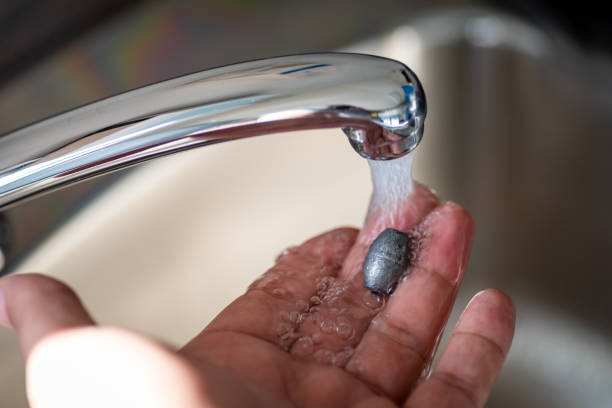
For many homebuyers in 2026, the appeal of “new construction” is rooted in the promise of a fresh start. There is a psychological comfort in being the first person to use the appliances, walk on the floors, and turn on the taps. In the context of environmental safety, the assumption is that a modern home is a fortress against the “old world” problems of the past specifically the risk of lead in water. The logic seems sound: lead was banned in plumbing decades ago, so a house built this year should, by definition, be lead-free.
However, professional water quality audits across the country are proving that this assumption is a dangerous oversimplification. New construction does not automatically equate to zero lead exposure. From the specific materials used in modern fixtures to the way a home connects to the existing municipal infrastructure, there are several pathways through which lead can enter a brand-new home. Understanding these nuances is essential for any homeowner who wants to ensure their “fresh start” is truly a healthy one.
The “Lead-Free” Regulation Gap
The most significant reason new homes can still fail a lead test lies in the legal definition of “lead-free.” Most people assume this term means 0.0% lead content, but federal regulations tell a different story. Since 2014, the standard for “lead-free” plumbing fixtures has allowed for a weighted average of up to 0.25% lead across the surfaces that come into contact with water.
While 0.25% is significantly lower than the 8% allowed in the 1980s, it is not zero. In a brand-new home, where the plumbing hasn’t yet developed a protective layer of mineral scale (a process that can take years), the water is in direct contact with the metal of the pipes and fixtures. This “raw” contact can lead to higher rates of leaching in the first few months of occupancy than in an older home where the pipes have been “seasoned.” This is a frequent topic in our faq, as new homeowners are often shocked to find trace amounts of lead in their first-draw samples.
The Physical Disturbance of the “Tap-In”
Every new home must connect to the city’s existing water main. This process, known as the “tap-in,” involves heavy machinery, drilling, and physical disruption of the underground water infrastructure. If the city’s main line is made of older materials, or if there are legacy lead service lines nearby, the vibration and pressure changes from the new connection can dislodge lead particles and sediment.
Once these particles are loose in the system, they can flow directly into the new home’s pristine plumbing. Because new homes often have high-efficiency fixtures with fine mesh aerators, these lead flakes can become trapped right at the kitchen or bathroom tap. A family moving into a new build may be the first to “flush” these construction-related contaminants through their faucets. On our blog, we strongly recommend that new homeowners perform a high-volume flush of their entire system before their first night in the house.
Imported Fixtures and the Global Supply Chain
In the age of online shopping and global trade, many builders and homeowners source fixtures from international markets to achieve a specific aesthetic or price point. While products sold by major US retailers must meet domestic regulations, fixtures purchased through secondary online marketplaces may not always comply with the 0.25% lead standard.
Even when a fixture is labeled as “lead-free,” the internal components valves, washers, and connectors might be sourced from different manufacturers who use varying alloys. In a new construction project with hundreds of individual connection points, the risk of a “rogue” lead-bearing component is statistically significant. Testing the water at each individual tap is the only way to verify that every fixture in the home is performing as advertised.
The Chemistry of New Copper and Solder
While lead-based solder was banned in 1986, some “lead-free” solders used in modern construction still contain trace amounts of lead (up to 0.2%). In a large new home with hundreds of soldered joints, these trace amounts can add up. Furthermore, new copper piping is highly reactive. Until the water chemistry stabilizes and a passivating layer forms on the inside of the pipe, the water can “scour” the metal, pulling out copper and any trace impurities in the solder.
For the first few months of a home’s life, the water chemistry is in a state of flux. This is why a water test performed the day after closing might look very different from a test performed six months later. Staying proactive with local testing during the “settling-in” period is a smart move for any new property owner.
Stagnation in Vacant New Builds
New homes often sit vacant for weeks or months between completion and the final sale. During this time, water sits stagnant in the pipes. As we’ve noted in our guides on lead in water, stagnation is a primary driver of metal leaching.
When water sits still, it has more time to react with the brass and solder in the plumbing. If a builder hasn’t regularly flushed the lines during the “showing” phase of the sale, the first person to move in may be greeted by water that has been “steeping” against metal for a long time. This is particularly common in guest bathrooms or basement wet bars that aren’t used during the final walk-through.
The “Last Inch” of the Service Line
Even if your new home is in a brand-new subdivision, you have to consider how that subdivision connects to the rest of the world. In some “infill” construction projects where a new house is built on a vacant lot in an old neighborhood the builder might only replace the plumbing from the house to the curb.
If the “city side” of the service line is still made of lead or galvanized steel, the new home is still being served by contaminated infrastructure. The homeowner assumes everything is new because their basement pipes are plastic, but the “last inch” in the street is still a legacy risk. Understanding the boundary between private and public plumbing is a key part of the contact we have with water specialists to help homeowners map their risks.
How to Verify Your New Home’s Safety
If you are moving into new construction, don’t let the “new car smell” distract you from the water quality. Follow these steps to ensure safety: Request a Construction Flush: Ask your builder to perform a high-velocity flush of all lines before you take possession. Clean the Aerators: Construction debris often collects in faucet screens. Unscrew them and clear out any grit or metal shavings. Perform a Certified Test: Don’t rely on a DIY kit. Get a professional, lab-certified lead test that includes a “first-draw” sample from the kitchen and primary bathroom. Test After Six Months: Once the home has been “lived in” and the plumbing has stabilized, perform a follow-up test to ensure that leaching levels have dropped to “non-detect.”
Conclusion: Trust but Verify
New construction is a wonderful opportunity to build a safe, modern environment for your family. However, the presence of lead is a matter of chemistry, not just age. By recognizing that “new” is a relative term in the world of water infrastructure, you can take the necessary steps to verify your home’s safety.
A certified water test is a small investment that protects the larger investment of your home and the health of the people inside it. Information is the best tool you have to ensure that your “dream home” truly provides a clean, safe start.
If you are currently in the process of closing on a new home or have recently moved into a new build and want to verify your water quality, our team is here to help. We specialize in identifying the unique environmental risks of modern residential projects. Please visit our contact page to connect with a specialist today. Let us help you confirm that your new construction is as safe as it looks.