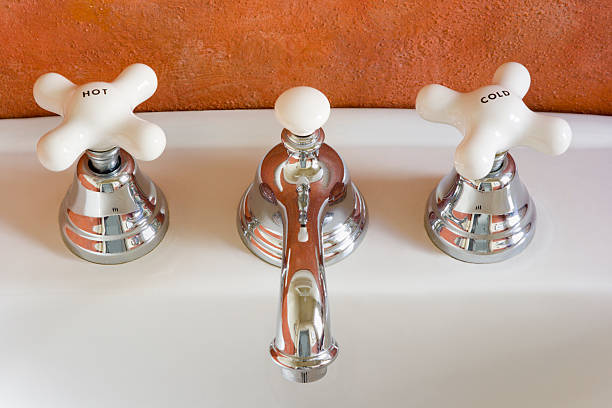
For decades, the standard advice regarding water safety has been a simple, repetitive mantra: “Only drink from the cold tap.” While this remains excellent foundational advice, it has created a dangerous blind spot in how we monitor our home environments. Most homeowners and renters assume that if their cold water passes a lead test, their entire plumbing system is safe. However, in 2026, professional water quality audits are increasingly revealing a startling discrepancy homes that are perfectly safe on the cold side can harbor significant levels of lead in water on the hot side.
Understanding why these two streams can have vastly different chemical profiles is essential for anyone living in established urban areas or older suburban developments. Testing both lines isn’t just about being thorough; it’s about identifying hidden failures in your home’s infrastructure that a single-sample test would completely overlook.
The Chemistry of Corrosion: Why Heat Changes Everything
To understand why a “split test” is necessary, we must first look at the relationship between temperature and lead leaching. Lead is a relatively soft and stable metal under cold conditions, but it is highly susceptible to thermal acceleration. When water is heated, its molecules move faster and become more chemically “aggressive.” This heat acts as a catalyst, breaking down the protective mineral scale inside your pipes and dissolving metal much more rapidly than cold water ever could.
If your home has older brass fixtures or copper pipes joined with lead-based solder, the hot water is effectively “scouring” those surfaces. This means that a faucet that returns a “non-detect” result for lead at 50°F might return a significant failure at 120°F. By only testing the cold tap, you are essentially looking at your home’s “best-case scenario” while ignoring the “worst-case scenario” that occurs every time you shower or run the dishwasher.
The Hot Water Heater: A Heavy Metal Reservoir
The most common culprit behind a hot-water-only lead failure is the water heater itself. Whether you have a traditional tank or a modern tankless system, these appliances act as a focal point for your home’s internal chemistry. In older tank-style heaters, sediment and mineral scale accumulate at the bottom over many years. If your home has even trace amounts of lead in its pipes, those microscopic particles can settle in the tank.
Once trapped in the heater, these particles are subjected to constant high temperatures, which causes them to dissolve into the water sitting in the tank. This creates a “lead reservoir” effect. When you turn on the hot tap, you aren’t just getting fresh water from the street; you are getting water that has been steeping in a concentrated environment of heat and sediment. We frequently address this “tank vs. tap” mystery in our faq, as it is often the reason a brand-new kitchen faucet still fails a hot-water test.
The “Pasta Water” Trap and Cooking Habits
The reason this discrepancy is so dangerous is that it intersects with common household habits. Many people, in an effort to save time, fill their pots with hot water before putting them on the stove to boil. They assume that because the water is going to be boiled, any impurities will be neutralized.
However, lead is a mineral, not a biological contaminant. Boiling water does not remove lead; in fact, it concentrates it as some of the water evaporates as steam. If you start with hot water that has already leached lead from your water heater or pipes, you are essentially creating a concentrated lead solution for your pasta, rice, or tea. This is why testing the hot line is so critical for families it identifies the source of exposure that most people inadvertently create for themselves in the kitchen.
Infrastructure and the “Halfway” Renovation
In many local homes, plumbing isn’t a single, uniform system. It is often a patchwork of different eras. You might have a modern PEX line running to your new bathroom, but it may be connected to an original 1950s lead-soldered main or an old brass shut-off valve behind the wall.
During a renovation, homeowners often replace the visible fixtures but leave the hidden “hot-side” connectors intact because they are harder to reach. A dual-stream test can pinpoint exactly where these legacy materials are hiding. If the cold water is clean but the hot water is contaminated, it’s a “smoking gun” that indicates the problem is located within the water heating system or the specific hot-water distribution lines. This data allows for targeted repairs rather than a blind, whole-house repiping project.
Navigating Regulations and Real Estate
In the current real estate market, transparency regarding regulations and safety is a major selling point. Most standard inspections for a home sale only require a single lead test, which is almost always taken from the cold kitchen tap. However, savvy buyers are now beginning to request “dual-draw” samples.
A seller who can provide a certified report showing that both the hot and cold lines are lead-free has a significant advantage. It proves that the home’s infrastructure is modernized and that the water heater is in good condition. Conversely, for a buyer, discovering a hot-water lead issue during the inspection period provides the leverage needed to negotiate for a new water heater or a specialized filtration system before closing. We track these shifting market trends on our blog to help residents stay ahead of the curve.
How to Perform a Comprehensive Split Test
If you are planning to test your home’s water, we recommend the following “Three-Sample” strategy: The First-Draw Cold: This captures lead from the faucet and the immediate cold-water pipes after the water has sat overnight. The Flushed Cold: This shows the quality of the water coming from the city main, bypassing your home’s internal pipes. The Hot-Draw: This should be taken immediately after the cold tests. Run the hot tap until the water is at its maximum temperature, then collect the sample. This will tell you if your water heater or hot-water lines are contributing to the problem.
By comparing these three data points, you can create a “map” of your home’s water quality. If only the hot-draw fails, you know exactly where to focus your remediation efforts.
Conclusion: Closing the Safety Gap
The “cold water only” rule was designed as a safety measure, but it was never meant to be a substitute for comprehensive knowledge. In an era where we have the technology to precisely measure our environment, there is no reason to live with the uncertainty of a half-tested plumbing system. Testing both your hot and cold water is a small investment that provides a complete picture of your home’s health.
Whether you are a parent making bottles, a home chef boiling pasta, or a homeowner looking to protect your investment, the data from a dual-stream test is the only way to ensure that your water at any temperature is truly safe.
If you have noticed a metallic taste when using your hot water, or if you are preparing to move into an older home and want to ensure the plumbing is safe, our team is here to help. We specialize in identifying the hidden risks in residential water profiles. Please visit our contact page to connect with a specialist today. Let us help you gain the full picture of your water safety, from the street to the tap, and from the cold to the hot.